Your muscles, one clue at a time
Tap where it hurts. See what's underneath. Check the suspects. Get your guide.
Musclue shows you the muscles under a sore spot on a realistic 3D body. Short checks help you see which one is likely involved, and its guide gives you exercises to stretch and strengthen it.
- No account
- Your answers stay on your device
- Every fact has its source


What is in Musclue today
- 52muscle guides
- 43short checks
- 110exercises to stretch and strengthen
- 220sources behind them
How it works
From a sore spot to your guide, in four steps
Tap where it hurts
Choose the male or the female body, turn it, zoom in and tap the spot. It is a realistic 3D body with its muscles modelled under the skin.
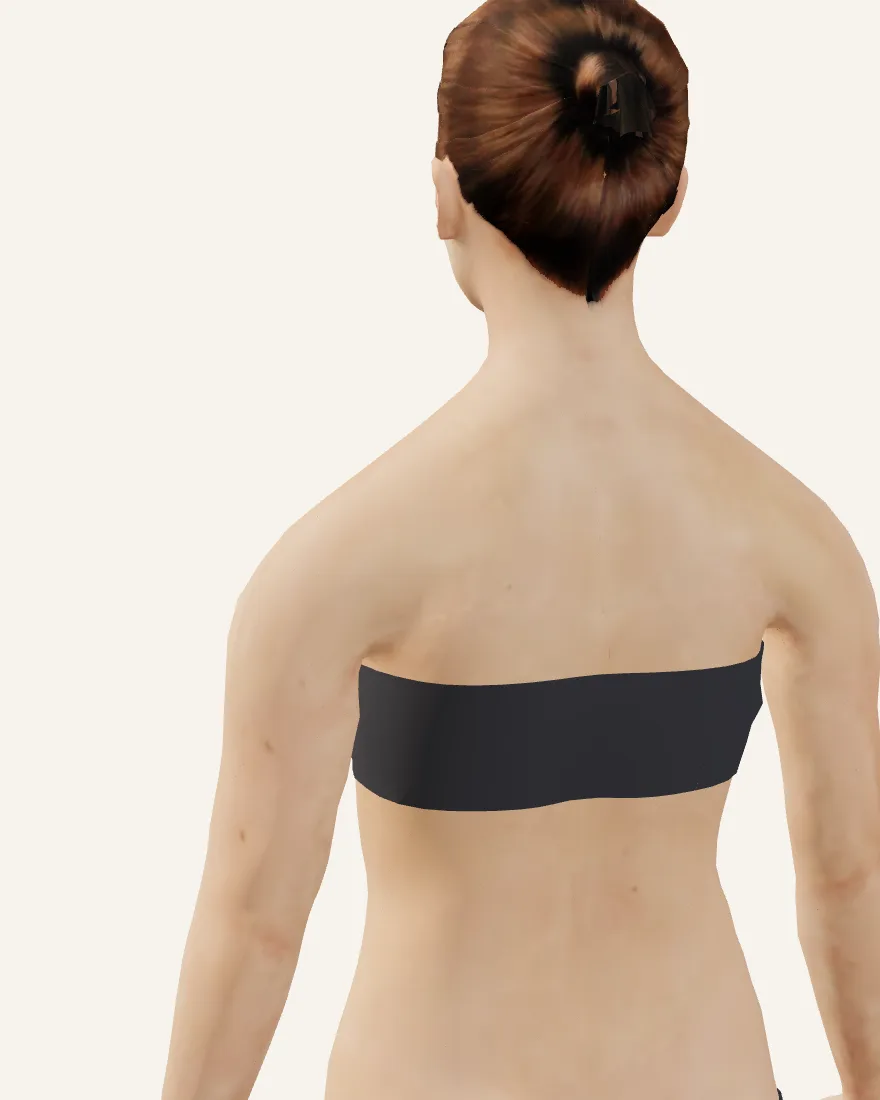
A tap on the shoulder blade. See what's underneath
The skin opens around your tap and shows the muscles that lie there. Peel them back layer by layer, from the surface down to the deepest.
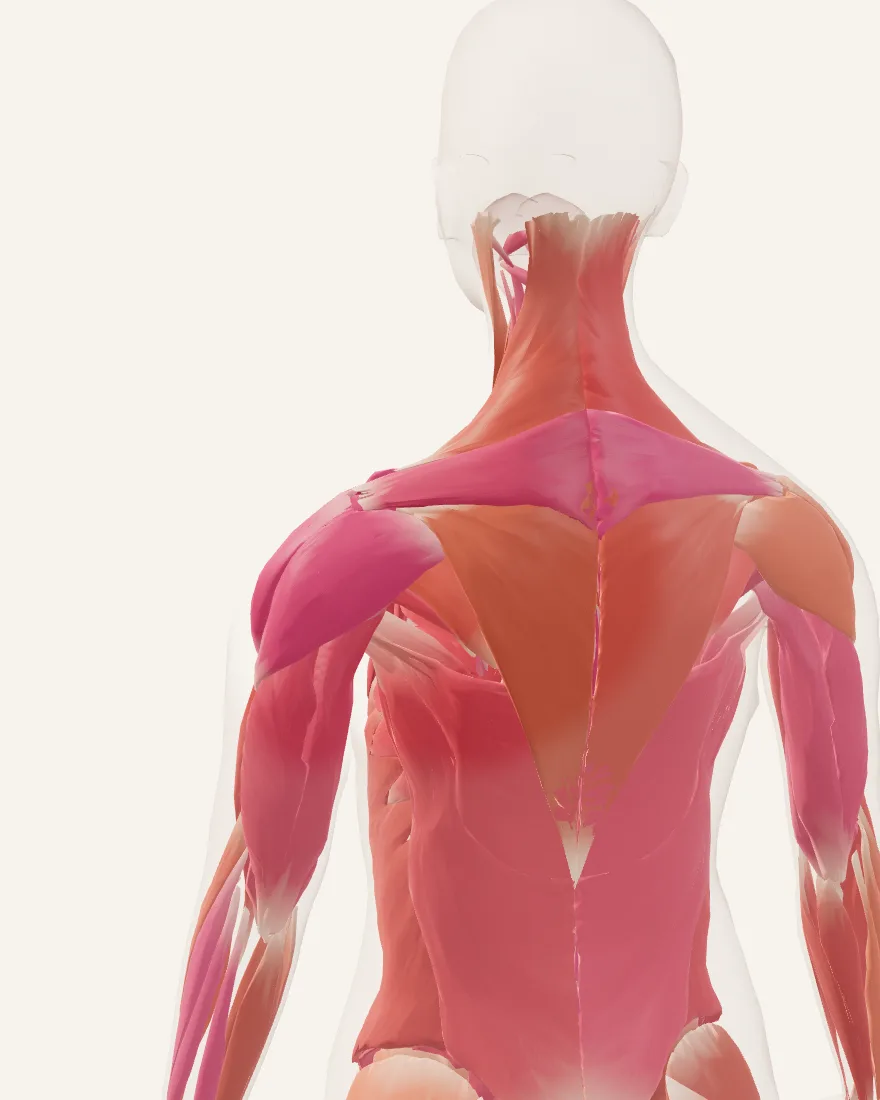
The skin opened around the tap, with the muscles under it. Check the suspects
51 of the 52 muscle guides have a short check: a movement or a hold, one step at a time, with one question at the end. Your answer marks the muscle as likely, possible or unlikely, on the body too.
Check it: Shoulder blade lifter
Head turn and tip check
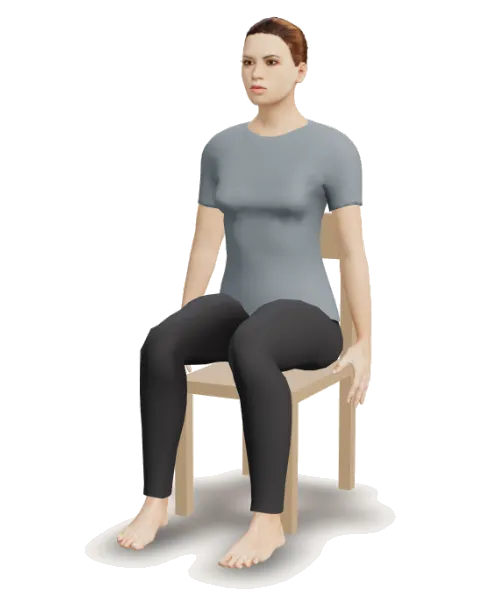
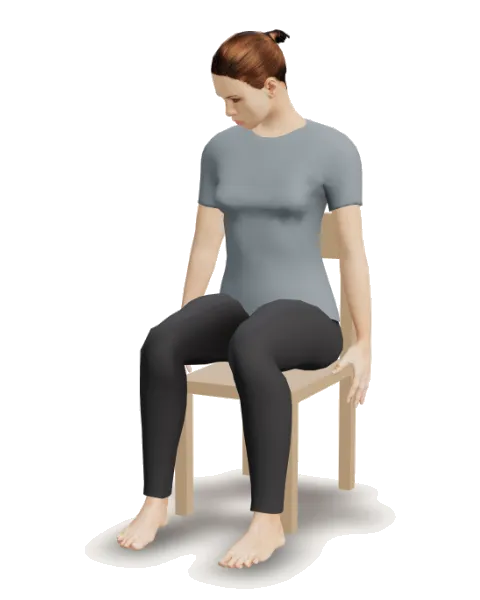
Did that bring on the pain you came here for?
- Yes, that's itLikely
- SomewhatPossible
- NoUnlikely
An example of a check: Shoulder blade lifter Get your guide
When a check says yes, that muscle's guide opens: stretches and strengthening exercises, easiest first, the muscles that can play a part, and how sure we are about each link. Every exercise comes with its steps and when to stop.
Your guide
Shoulder blade lifter
Levator scapulae
Likely: your check said Yes
- Stretch 2
- Strengthen 2
- Root causes 2
Seated head turn and tip stretch
- 2 × 30 s
- Rest 30 s
- No equipment
- Level 1
Shoulder blade squeeze
- Hold 20 s
- No equipment
- Level 1
An example of a guide: Shoulder blade lifter


The library
52 muscles, each with its own guide
These are the muscles with a guide today; the 3D body shows the others too. Every guide is also a page you can read without the 3D body, with all it holds and the sources behind it.
- Back rotator cuff muscleInfraspinatus
- Back upper arm muscleTriceps brachii
- Between-shoulder-blades muscleRhomboideus major and minor
- Boxer's muscleSerratus anterior
- Broad back muscleLatissimus dorsi
- Calf muscleGastrocnemius
- Deep arch-support muscleTibialis posterior
- Deep belly corsetTransversus abdominis
- Deep calf muscleSoleus
- Deep chest musclePectoralis minor
- Deep head flexorLongus capitis
- Deep hip flexorPsoas major
- Deep hip rotatorPiriformis
- Deep neck flexorLongus colli
- Deep outer hip muscleGluteus minimus
- Deep side neck musclesScalenus anterior, medius and posterior
- Deep spine stabiliserMultifidus
- Front belly muscleRectus abdominis
- Front rotator cuff muscleSubscapularis
- Front upper arm muscleBiceps brachii
- Head turnerSternocleidomastoideus
- Hip hitcherQuadratus lumborum
- Inner front thigh muscleVastus medialis
- Inner hamstringsSemitendinosus and semimembranosus
- Inner pelvis hip flexorIliacus
- Inner side belly muscleObliquus internus abdominis
- Inner thigh musclesAdductor longus, brevis and magnus
- Knee unlockerPopliteus
- Large buttock muscleGluteus maximus
- Large chest musclePectoralis major
- Long diagonal thigh muscleSartorius
- Middle front thigh muscleRectus femoris
- Outer front thigh muscleVastus lateralis
- Outer hamstringBiceps femoris
- Outer hip muscleGluteus medius
- Outer lower leg musclesFibularis longus and brevis
- Outer side belly muscleObliquus externus abdominis
- Shin muscleTibialis anterior
- Shoulder blade lifterLevator scapulae
- Shoulder blade lowererTrapezius, pars ascendens
- Shoulder blade pullerTrapezius, pars transversa
- Shoulder cap muscleDeltoideus
- Shoulder shruggerTrapezius, pars descendens
- Skull base musclesRectus capitis posterior major and minor, obliquus capitis superior and inferior
- Small back rotator cuff muscleTeres minor
- Spine straightenerErector spinae
- Thigh band tightenerTensor fasciae latae
- Thin inner thigh muscleGracilis
- Thumb-side forearm muscleBrachioradialis
- Top rotator cuff muscleSupraspinatus
- Wrist curlersFlexor carpi radialis, palmaris longus and flexor carpi ulnaris
- Wrist liftersExtensor carpi radialis longus and brevis, and extensor carpi ulnaris
Sources
Every fact has its source
Each fact about a muscle or an exercise comes with the source it is taken from: Gray's Anatomy of 1918 and open-access papers and textbooks. Every source is named and linked, so you can read it yourself.
220 sources, each linked from the guides that cite it
Models, datasets and licencesHow sure we are
A link between two muscles is a possibility, never a certainty. Each one says how strong the evidence behind it is, in plain words:
- Strong evidence
- Several good studies have tested this link directly, and they agree.
- Some evidence
- At least one good study has tested this link directly and supports it, but not yet enough to call it strong.
- Common clinical view
- The link is widely described and used in practice and teaching, but no direct studies settle it.
- Theory
- The link follows from what the muscles do, but no studies have shown it.
Privacy
No account. Your answers stay with you.
No sign-up
Nothing in Musclue needs an account.
Kept on your device
The spot you mark and what your checks say are saved in this browser, on your device. They are not sent to our server.
Education, not medical advice
Musclue helps you learn about your muscles. It is for adults (18+) and does not replace a qualified health professional.